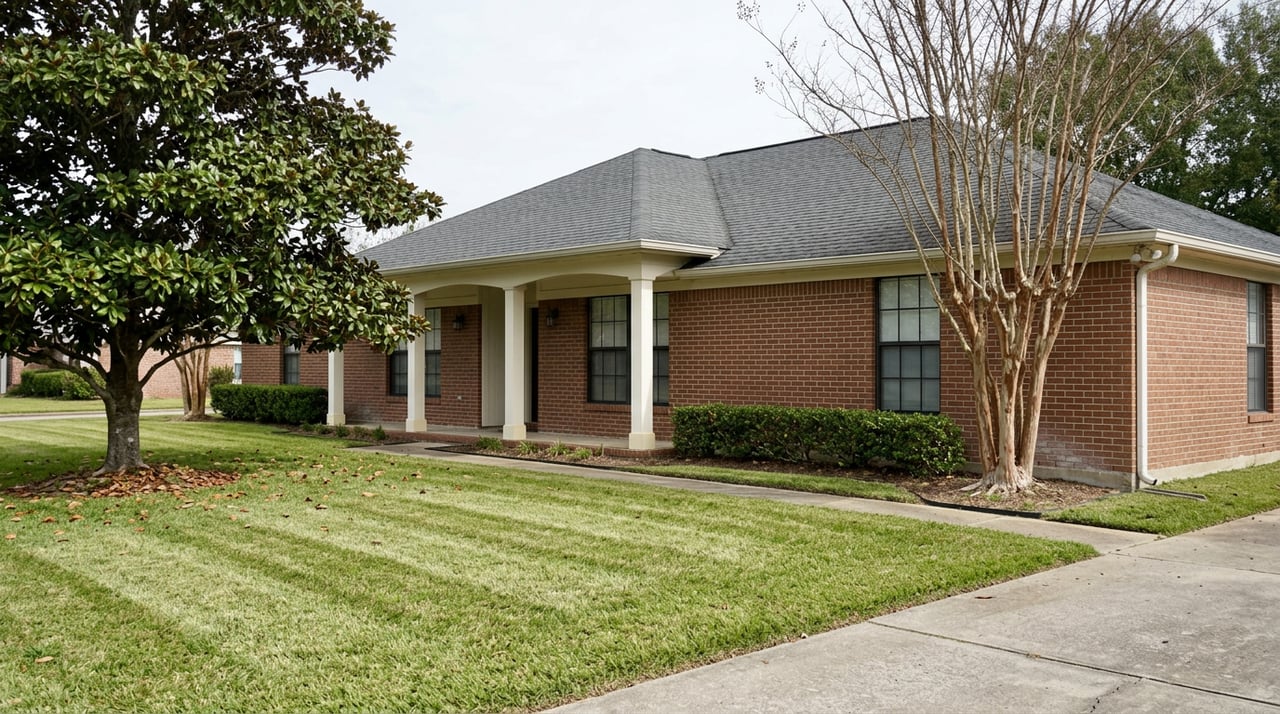
Push a shovel into a Brighton yard in late July and you will hit it eventually. Not rock. Not roots. A dense, almost cemented layer a foot or two down that stops the blade cold and sends a jolt back up your arm. Homeowners who move here from softer ground often think they got unlucky with their particular lot, or that the previous owner never took care of the place. Neither is true. That layer runs under most of the town.
It is called a fragipan, and once you know it is there, a lot of things about maintaining a yard in Brighton start to make more sense.
What's Actually Under That Topsoil
Tipton and Shelby County soils were built by wind, not water. Over thousands of years, fine silt blew in and settled into deep deposits, the kind soil scientists classify as Memphis, Loring, and Granada silt loam. It is good ground for growing things. Corn and soybean fields across West Tennessee sit on close relatives of this same soil. But windblown silt has a habit of compacting into a dense, brittle layer well below the surface, and that layer resists water and roots in a way topsoil never does.
The USDA's Natural Resources Conservation Service describes a fragipan as a compact, almost cement-like band that restricts root growth and slows or stops water from moving through the soil profile. It typically sits somewhere between eighteen and thirty-six inches down. Above it, the soil behaves normally. Water drains, roots spread, grass grows. Once water hits the fragipan, though, it has nowhere to go. It perches there, sometimes for days, which is part of why low spots in Brighton yards can feel spongy in spring even when the rest of the lot has already dried out.
Why It Waits Until You Least Expect It
The fragipan itself does not move or change. What changes is how hard the ground above it gets packed down over time, and that is where most Brighton homeowners actually run into trouble.
A yard that has never been aerated tends to carry years of compaction before anyone notices where it came from. It shows up first in the places you would expect: along driveways, around play equipment, anywhere a truck or trailer has parked more than once. The grass thins, water pools instead of soaking in, and the usual fixes, more fertilizer, more watering, do not help much because the problem is not the grass. It is the six inches of soil the grass is trying to root into.
This is also why a single aggressive mowing weekend rarely solves anything on a lot close to an acre, which is common here. An acre is too much ground for pull-and-spray effort to keep pace with what compaction does slowly and continuously. It takes a program built around the actual size of the lot, not a one-time push in April.
Why Almost Every Brighton Yard Runs on Bermuda
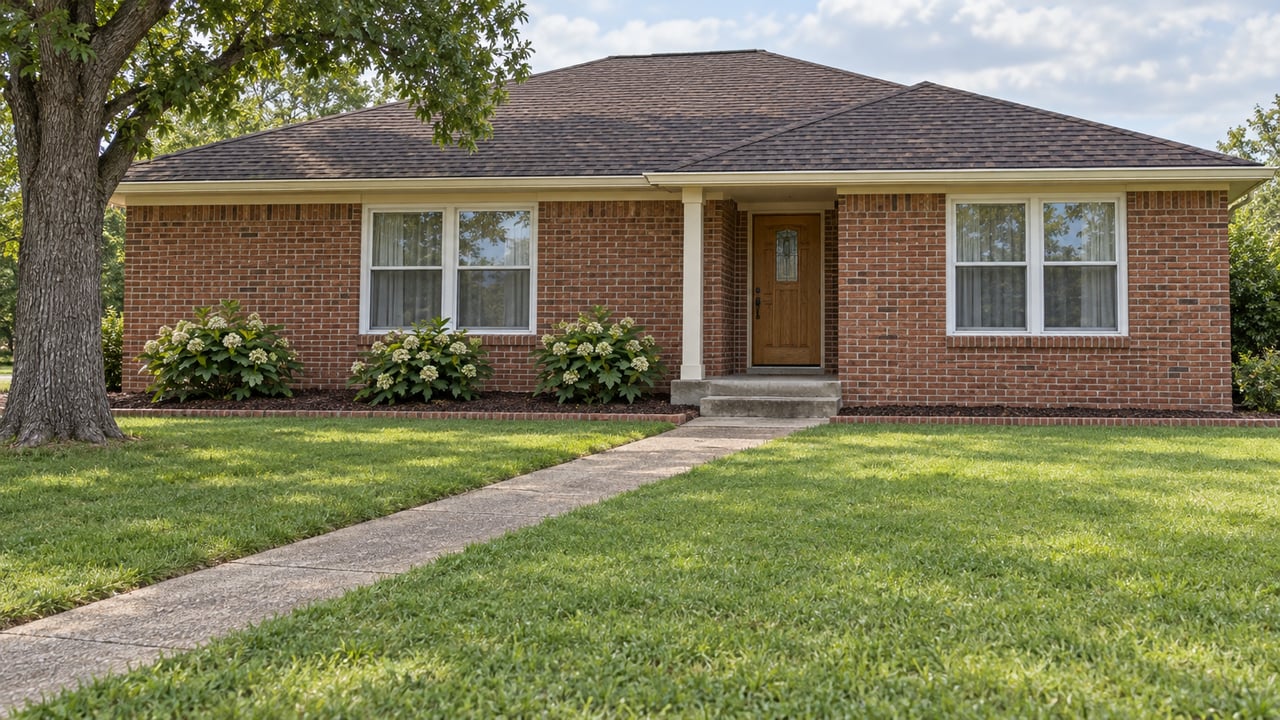
Walk or drive through neighborhoods like Woodlawn Plantation or McAlister Place, or the streets around Brighton High School, and the pattern is consistent. Lots are wide. Trees are scattered rather than clustered into a canopy. That is not an aesthetic choice so much as a function of how the town was laid out, with country roads and subdivisions built for space rather than shade.
Full sun on silt loam over a fragipan is close to ideal territory for bermudagrass, which is why it dominates here rather than the shade-tolerant fescue blends common in denser, tree-heavy subdivisions elsewhere in the region. Bermuda tolerates the heat, handles the compaction better than most alternatives, and goes dormant in winter rather than fighting through it. The tradeoff is that dormant Bermuda opens the door for exactly the kind of cool-season weeds that thrive in the gap.
The Weed Calendar That Never Really Stops
Because winters here are mild rather than hard, the weed pressure in a Brighton yard follows a rotation that rarely takes a full break:
- Winter annuals like chickweed and henbit move in while Bermuda sleeps through the cool months
- Crabgrass takes over as the soil warms into spring
- Nutsedge follows once summer heat sets in, often thriving in exactly the spots where the fragipan keeps the ground wettest
A mild winter does not slow this rotation down. If anything, it gives the cool-season weeds an extra few weeks they would not get further north, which is part of why late-winter timing matters more here than a calendar date does. A pre-emergent applied before the soil actually wakes up works. The same product applied two weeks later, after a warm stretch, often does not.
If you have lived here long enough, you already know the rhythm without being able to name it. The yard looks fine in April, fights you in June, and by August you are wondering what you did wrong. The honest answer is usually nothing. The ground was always going to do this.
Testing Your Own Ground
The fastest way to stop guessing is a soil test rather than another bag of fertilizer. University of Tennessee Extension runs soil testing through its county offices for roughly ten to fifteen dollars a sample, and the results tell you the actual pH and nutrient picture for your specific lot rather than a townwide assumption. Given how much variation a fragipan can create between a low spot and a high spot fifty feet apart, a single test on the part of the yard giving you the most trouble is often worth more than a season of trial and error.
Aeration timing follows the same logic as weed control. It works best tied to actual soil temperature, not a date on the calendar, because the fragipan does not care what month it is.
A Shared Piece of Ground
All of this plays out on private lots, but the same soil sits under Brighton's public spaces too. The town park on Old Hwy 51 has hosted the community's rhythm for years, its playground and walking track drawing residents through every season, its ballfields and courts carrying youth baseball, basketball, and soccer for kids five to sixteen. The community center nearby is where the town's senior citizens gather daily. Each fall, the park fills again for the Town of Brighton's Fall Festival, with food trucks, hayrides, and live entertainment marking the same stretch of calendar when private lawns are just coming out of the crabgrass fight and heading into dormancy.
None of that is coincidence exactly. It is what a town built on wide, sunny lots and windblown silt loam tends to produce, both in the yards people maintain themselves and in the shared ground where the community actually spends its time.
Knowing what is under your feet will not change the fragipan. But it changes what you expect from a Brighton yard, and it usually saves a homeowner a wasted season or two of chasing symptoms instead of the cause.
If you are thinking about a move to Brighton, or already call it home and have questions about what a particular property's ground and location might mean for you, Dawson Realty Group knows this part of Tipton County well. Contact Us anytime.